Monday, April 2, 2012

E349S April 3: Salvation is in Your Hands

God is the Right Way

Gerard Hopkins's poem "Fragments of St. Winefred" provides the reader with the principle of righteous action and subsequent salvation. The first line highlights the importance of devout religious behavior because  if "[one will] fully follow the traces of the ancient deed, these are outstandingly full of holy power." [1] Hopkins emphasizes the necessity for rigid morality and righteous behavior for redemption and salvation during one's final judgment by God. Similarly, Hopkin's poem, "As Kingfishers Catch Fire," a personal favorite of mine, provides an interchangeable idea of devout behavior and ascension to Heaven as "the just man justices" and "keeps grace" as a result. [2] Looking at the historical context of the "Fragments of St. Winefred," Saint Winefride "was of royalty and Prince Caradoc wanted to merry her, but she kept herself pure to become a nun," but as a result, Prince Caradoc," tried to rape her and beheaded her."[3] 

Righteous Behavior Versus Temptation
Saint Winefride was punished for her religious purity and devout habit, murdered for her commitment to Christianity and God. She held true to her righteous nature, and although she died for such, she was blessed by God and ascended to Heaven as a saint, a true follower of Christ's mission. Thus, one must preserve his or her religious mindset to receive the grace and salvation of God. Both poems emphasize the need for just and moral behavior as a precursor for grace. 

Tell Me Your Name and Your Business

Lewis Carroll's "Humpty Dumpty" chapter highlights the significance of the self in relation to identifying characteristics like name roles. Whilst Alice and Humpty Dumpty have discussion, Humpty Dumpy demands  Alice to "tell [him] [her] name and [her] business," but more importantly, the meaning of her name. [4] Humpty Dumpty brings forth the notion of name associations, and the constant need for society to define and construct rigid meanings for everything within life, including one's name. Curiosity result in the need to define and understand all aspects of life, and thus, society has an ever-increasing need to define every minute facet of life, just as Humpty Dumpty finds a need for one's name to hold deeper meaning, whether it be literal or metaphorical. 

The Name is Key to Identity

As a real-life example, my fraternity assigns fraternity brothers fraternity names and numbers, but rather than assign such for the purpose of a identifying face with name, each name and number holds a deeper meaning. Humans, as a whole, feel the necessity to create rigid constructs of meaning and definition to understand and comprehend life itself. Lewis Carroll points at this desire with Humpty Dumpty who barrages Alice with a demand for defining who she is and what her name means. 

Works Cited
1. Gerard Manley Hopkins, The Major Works Including all the Poems and Selected Prose (New York: Oxford University Press, 2002), 132.
2. Hopkins, The Major Works, 129.
3. "The Truth and Legend of St. Winefride and Gwytherin," BBC, February 1, 2010, accessed April 2, 2012, http://news.bbc.co.uk/local/northwestwales/hi/people_and_places/religion_and_ethics/newsid_8481000/8481421.stm. 
4. Lewis Carroll, The Annotated Alice: The Definitive Edition, (New York: W.W. Norton & Company, Inc, 2000), 208.


E349S February 28: Lobsters and Windhovers


Franz Ferdinand
Here is a lively cover of the Lobster Quadrille by Franz Ferdinand, a Scottish post-punk revival band. 
http://www.youtube.com/watch?v=zxeHzWWGuh0
As Alice continues along her adventures in Wonderland, she faces a vast array of trials and tribulations. Ranging from encounters with the hookah-smoking caterpillar to the ridiculous Croquet game with the Red Queen, Alice encounters abnormal instances, contrasted from her supposed Victorian era lifestyle. Prior to meeting the Gryphon and the Mock Turtle, Alice had "no idea what a delightful thing a Lobster-Quadrille [was]."[1]  The Gryphon and the Mock Turtle display the Lobster-Quadrille, a nonsensical take of the quadrille, for young Alice. 
Everybody Do the Lobster-Quadrille!

World of Dance defines the quadrille as "a historic dance performed by four couples in a square formation, a precursor to traditional square dancing."[2] 
Alice's Encounter with the Mock-Turtle and Gryphon

Given the historical context of time period, Alice as well as the rest of the "Liddell children had been taught the dance by a private tutor."[3] Alice is exposed to irregularities which parallel reality, specifically the quadrille in this chapter. An underlying theme of redefining normalcy is seen here because the Gryphon and Mock Turtle alter a classic dance to their own liking. Because similar yet differing aspects are found between reality and fantasy, Alice is caught between a rock and a hard place, confused by the uniqueness and lack of normalcy found in wonderland. In a deeper sense, Carroll utilizes this idea of normalcy to force readers to question the regularity and lack of individualism in our own lives and realities. Even Carroll himself states "[he] never dance[s], unless [he is] allowed to do it in [his] own particular way."[4]  This idea of dancing bridges the the gap between reality and individualism, given normalcy and comparison are subjective to each individual alone. 
The Windhover's Majestic Glory

Gerard Manley Hopkin's poem "The Windhover" proves to be a true testament to the glorified image of the Son of God, to Christ the King. The subtitle, "To Christ our Lord," was added "six years later as a dedication and/or a way of addressing the entire poem to Christ" (Bump 409). Provided most of the metaphors are directed toward Christ, there is an"undercurrent of imagery of Christ the King," especially seen in the splitting of "'king' and 'dom" because 'dom" is a shortened form of the term "'dominos' or 'Lord," and thus an echo of the dedication to Christ" (Bump 410). Hopkins utilizes the Windhover as a symbolic representation of the all-powerful and celestial Christ figure, thus giving way Christ reigning over mankind, chivalrous and and strong just like the soaring Windhover, which is glorified as king. Just as Hopkins exemplifies the beauty and magnificence of the Windhover, he also recognizes the beauty of creation in his poem,"Pied Beauty". 
"Glory be to God for Dappled Things"

"Pied Beauty" opens with an offering, "Glory be to God for dappled things--/For skies of couple-colour," and "The Windhover" does just the same, dedicating the vivid imagery of the Windhover to Christ our Lord.[5] "Pied Beauty" praises God's creations, beginning with characteristics of things in the world, and ending with a final affirmation of God's will and establishment of nature as his own. In "The Windhover," Hopkins praises Christ the King, describing the awe and immense celestial power associated with such through the personification of the Windhover. Both emphasize the beauty of nature in direct relation to the grandeur and divinity of God and Christ both.

Works Cited
1. Lewis Carroll, The Annotated Alice: The Definitive Edition, (New York: W.W. Norton & Company, Inc, 2000), 100.
2. "All About Dance: Quadrille," August 30, 2009, http://worldfordance.blogspot.com/2007/10/quadrille.html.
3. Carroll, The Annotated Alice: The Definitive Edition, 100.
4. Carroll, The Annotated Alice: The Definitive Edition, 100.
5. Gerard Manley Hopkins, The Major Works Including all the Poems and Selected Prose (New York: Oxford University Press, 2002), 132.

My Project Two Paper Critiques by Peers


My Project Two Paper Critiques by Peers

Christopher Contreras
“It is basically impossible. Might as well give up. Then again, it is that glimmering quality, that beautiful reflection in the mirror, that unique essence of solid identity that defines humanity.”

Suggestion for Revision: For me, this sentence was a non-sequiter. I do not understand the connection between the “unique essence” or “solid identity” you are talking about. So, because there is no clear reference, I cannot make an accurate word to word rewrite. I STRONGLY recommend some clarity when editing this portion of the paper.

“Given the impossibility of this situation, one must give up. Talk about x-glimmering quality, reflection and solid identity. It is this glimmering quality, that beautiful reflection in the mirror, the unique essence of solid identity which defines humanity.”

Specificity— 3.
Some parts of your paper are wanting in specificity. You do a great job at imposing original claims and analysis, but you do not always follow them through. For example, you write: “The literature does not feed Alice's imagination, hinting at her young age and respective maturity.” In this quote, you answer WHAT hints at Alice’s young age and respective maturity, but you fail to go beyond this. Doing so harms your paper and you miss an important question – the WHICH. Which aspects of this book hint at Alice’s maturity, HOW does it hint at Alice’s maturity. Follow through with your ideas. In this specific example, what about Alice’s youth makes her unable to appreciate her sister’s readings.
Here is a second example. You write, “Throughout the story, Alice has significant difficulty achieving the proper size necessary, implying her difficulty in establishing her subject position within the Wonderland discourse.” Like a cartoon, there are a bunch of question marks floating above my head. The wording in this sentence is incredibly vague and abstract. The words “necessary” and “proper” are redundant, and I am unsure of what you mean by subject position. I feel this is thesaurus language: a mix of words inorganic to your lexicon, or words you are trying to force. Tone it down a bit and this should help with your specificity. When you try to say so much at once, you sometimes don’t say anything at all.


Conciseness—3
For conciseness, I would like to draw your attention to a line at the end of your paper. Let this be an example for your entire paper:

“At the end of Tim Burton's film adaptation, Alice constantly refuses to accept the responsibility of slaying the Red Queen's Jabberwocky, "a deadly creature" she will kill on "Frabjous day", the foretold day Alice will defeat the Jabberwocky; subsequently, Alice will free Underland from the oppressive rule of the Red Queen.”

This is one long sentence. There is a theme in your paper: you try to say a lot of really important things in one sentence. For conciseness, you want to avoid this. Try breaking apart complex ideas like this into many sentences, or trim the extra information. I suspect your lack of conciseness is solely responsible for a lack of specificity. As is, the language is dense and extremely confusing. 

Adam Amrani
Alexis:

Original: Given the parallels between each of the Alices' discourses in Wonderland, the young Alice's confrontation with the Queen and consequent loss of innocence mirrors the adolescent Alice's defeat of the Red Queen and her tragic, yet inevitable loss of childhood innocence.

Revision: Adult Alice’s defeat confrontation with the Queen and thus loss of innocence in the movie mirrors the adolescent Alice’s defeat of the Red Queen and her tragic, yet inevitable loss of childhood innocence in the book.


Specificity: 4

You break into a lot of abstractions throughout this essay that could be easily cleared up. I’ll put some examples down here but these certainly aren’t exhaustive of the complete work.

“Consequently, Hamish will propose to her at this festivity”

I’m unsure of who this is.


“Given the equilibrium effect, Alice forms a new identity and discourse that can defeat the mighty Jabberwocky”

What equilibrium effect are you talking about?

“Only in his presence does Alice finally form a discourse suitable to defeat the Jabberwocky”

what do you mean when you say “discourse”


Conciseness: 4

You write extremely large paragraphs and some wordy sentences, and repeat some ideas in the essay. It seems that at one point you list all the comparisons you could find between the film and the essay in one large paragraph. Try to break this up into smaller paragraphs comparing the two in more specific topics.

“Just as Absolem helps the child Alice form her identity, he also impacts the adolescent Alice.”

You established this previously, no need to repeat.


All that said, also make sure to proofread once you turn in your final project. It was interesting reading about the film in this light, as I’ve never seen it. Cool topic.

-Adam

Christina Squiers
Your paper brought a very interesting perspective to a movie I hate! Good job picking an interesting topic. However, I have some serious problems with your writing style. I understand you're trying to go for a very personal, colloquial style, but it just doesn't work out right. You have many proofreading errors, and the spacing of your paragraphs is erratic.

"Everyone faces it, everyone goes through adolescent growth, and everyone is drowning in the demands, pressures, and influences of society. Thus, the true grasp of nirvana and identity is lost. C'est la vie."

The pressures, demands, and pains of going through puberty is universal to every young person. Therefore, nirvana and identity are lost in this whirlwind time.

Specificity: (3) You give short, abstract sentences a lot that don't help further your point. In fact, I'm a little unsure of what the entire theme of your paper is. However, here is a specific example of what I'm talking about:

he is not properly invited to sit with them, so she is unwelcome at first. Alice attempts to instruct the guests on proper etiquette. By doing so, Alice attempts to influence the discourse she is in.

What? What do you mean by discourse?

Conciseness: Woah dude, you have an issue with the length of your paragraphs. Your second to last paragraph is very large, and addresses many different subjects. You should look at that one more carefully and see if you can split it up into several different paragraphs so you have, at least, a more aesthetically pleasing paper.

Cameron Mcneel
Hey dude,

I would really work on sharpening up the knife's edge with this paper. The overall idea is a good one, but the execution falls a little flat. The paper seems a bit muddled in an attempt to convey ideas intelligently. Don't worry about that. Words don't have to have more than three syllables to get the point across.
Otherwise, good job, and have fun

Christine Scott
Original sentence: "Tim Burton's Alice nor Carroll's Alice has a sense of identity."
Revised: "Neither Tim Burton's Alice nor Carroll's Alice has a sense of identity."

Specificity-4: Sometimes you go into far too much detail with summarizing. Other times, you make abstract statements that don't have much support. If you can balance these two, clarifying the abstract statements with evidence and explanation, you'll be much better off.

Conciseness-2: Basically, throughout the entire essay, you take a long time to say not very much. You repeat ideas a lot. Don't be totally discouraged by the low score, though; it's not that you spend the whole essay beating a dead horse and need to start over, it's just that in almost every paragraph, you repeat that paragraph's central idea a couple times. If you cut out the repetition and especially stop using so many long words where a few short ones will suffice, I think you'll be better off.

A few other things: First off, you're misusing words. "Discourse" means "conversation." "Demise" means "Death." "Dire" can be used mean "urgent," as in to be in dire need of something, but "direly" doesn't mean "urgently," it means "perilously." There might be more that I didn't catch, so you should probably read over your paper and look up the definitions of words you aren't 100% sure about. Also, watch your summary--a couple times, you just narrate what happens in the book or movie without making any real connections. As a final note, you might want to explain that the Red Queen and the Queen of Hearts are two different characters in the book but a composite character in the movie.

WIlliam Tangey
The Sentence: The movie portrays adolescent Alice in her first meeting with the Caterpillar in a very similar way as the book portrays the younger Alice in her first meeting the Absolem.

The Revision: The film portrays Alice's first meeting with the sagely insect much the same way the book does.

Conciseness: 3 - This is really more a personal pet peeve of mine, but you spent quite a lot of time reminding the reader of things you'd already established. We know Alice personifies curiosity. We know Alice has an adventurous nature. You also summarize events quite a bit throughout the paper. This isn't necessarily a bad thing, but make sure the meaning of different events comes through more than the descriptions of them.

Specificity: 4 - While you do include a great number of quotes supporting your summaries and analyses, it would have been nice to see some supplementary material from the movie. Maybe see if the script is accessible for set directions and such or track down some interviews or director commentary. I'm sure there are plenty of things available considering how recently the movie was made and how relatively well-known it is.

Also kinda unrelated, but you keep using 'peak' or 'peaked' when I think you mean 'pique'. You also mention 'rights of passage' which should be 'rites'.

Blake Earl
“While Alice continues her journey through Wonderland, she struggles to realize she must adapt to the new discourse she resides in, finding her inner strength and courage to do the impossible, toaccomplish what is just, to bring down the oppressive rule of the Red Queen.”
“As Alice journey’s through Wonderland, she struggles to adapt to her new surroundings and fails to find her inner strength and courage. She must realize this before she can do the impossible, what is just; to bring down the oppressive rule of the Red Queen.”
Specificity: 4
I could definitely tell what you were getting at, but I had to make an effort. Some sentences were too convoluted and had to be navigated to be understood. I think your main flaw is the misuse of repetition to create emphasis.
Conciseness: 3
While reading your paper, I got the feeling a lot of it is plot summary with little focus on the significance tied to it.
Both values are tied to the sense I got while reading your paper that you were really going for that word count limit, opposed to expressing your ideas effectively.

Sasha Henry
Hmm.

Specificity: 4
The content was specific, but the evidence used, the images. I was glad you were sticking with Burton's pictures which is what you were writing about all along, but then you threw in the 1950s Disney picture and then I'm pretty sure the last one is from Burton's. I don't know, but that threw me off!

Conciseness: 4

Like Blake says his critique, I notice more plot summary and little significance brought from it. Bring out meaning from it.

Lewis Carroll's Adventures in Wonderland should be italicized, right? Maybe it's because it's on blackboard.

Otherwise, it's a good paper. I've been able to see exhibits of Tim Burton's sets up close and in person before. So the topic really interests me! He's great. Did he do enough justice to Lewis Carroll though? I wonder what he would think of all the content that has sprung forth from him. :)

My Critiques of My Peers' Project Two Papers


My Critiques of My Peers' Project Two Papers
Critique of Aaron Levine
"The last way in which Lewis Carroll broke down the confines of language was through philosophy, that is the philosophy of words and their meaning."

Suggested edit: Through the philosophy of words and their meanings, Carroll is able to use this technique as his concluding strategy to describe the confines of language.

Conciseness: 3. Your ideas are great but sometimes I had to reference previous paragraphs in order to understand the train of progression of the essay. In theory, it should be an easy read through and the reader should be able to go through without having to scroll back and forth from paragraphs.

Organization: 4. Apart from the occasional scrolling to look at previous paragraphs, everything seemed well organized neat. It was easy for me to understand what your thesis was and you made a point to reference that in each individual paragraph from that point forward, I really liked that aspect of it. You had an idea and you stuck by it.

Critique of Adam Amrani
1) Organization and Logical Order of the Prose: 6
Considering the paper is informative rather than argumentative, it flows pretty well between the translations of Alice via text and film. The transitions and introduction sentences transition examples pretty well. The only thing that stuck out to me was the strength of the "Film Adaptation" section. i would divulge deeper into the similarities and differences between movie adaptations in different languages, specifically Arabic. The analysis and information seems rushed and too concise. I would expand at least one more specific occurrence in the movie where translation appears significantly different, affecting the overall message, theme, social commentary, etc.

Original: "The duck character later finds his place within a group of black swans, perhaps in a combination of Alice and The Ugly Duckling. The case for animal ethics that we see highlighted in the original version of Alice is transformed into a sort of child’s allegory in these adaptations. The chance for small lessons is later taken again when Alice meets the smoking caterpillar in this adaptation, who uses his smoke to signal the help of a group of ducks. His smoke makes him sick, thus providing children a useful message to not smoke."

Revision: In addition to allegorical references, the film adaption provides audience underlying social commentary and activism. Alice's encounter with the Caterpillar hints at the health implications of smoking. The Caterpillar utilizes his smoke to signal the help of a group of ducks, and his habitual smoking makes him sick. The detrimental effects of smoking are voiced through the Caterpillar, thus translating a public deterrence of such.

***I would examine at least one more example in film that provides a different meaning from the original text via translation.


2) Word Choice: 5
I agree with Chis that you use "translation" too often, and of course, that can be fixed with sentence structure and active voice. I also noticed you use the word "this" quite often as a an unnecessary modifier, so try and delete those as much as possible (I made the same error throughout my project 1 and 2).

Original: "The act of “translation” allows this author to truly re-write a text, and to bring his own set of belief systems and rhetorical situation into the subject. Some might consider this interpretational re-writing of a text to be blasphemy in the case of Carroll because “Our immediate reaction when we encounter difference is to refuse that difference.”

Revision: "The act of “translation” allows the author to truly re-write a text, and to bring his own set of belief systems and rhetorical situation into the subject. Some might consider the interpretational re-writing of a text to be blasphemy in the case of Carroll because “Our immediate reaction when we encounter difference is to refuse that difference.”

Critique of Blake Earl
"In the picture above, you can see the number of doors and Alice’s confusion as she tries to pick one. "

Revision: As shown in the picture above, you see the number of doors and Alice's confusion as she attempts to chose one.


Organization: 4. Everyone has mentioned and commented on the fluidity of this essay and I have to agree that although it is concise when certain points are addressed but the overall cohesiveness doesn't work well and sound neat.

Specificity: 5. As Katherine and Chris have mentioned, there are some abrupt interruptions in your paper which cause for a bit of confusion. Sometimes you take 2 or 3 sentences to describe something that could be described in one. The connections aren't concisely made wisely. With just a bit of clarification and revision, this could be easily fixed.

Critique of Cameron Mcneel
1) Proofreading:  4
So…there are quite a few errors with proofreading and punctuation, so make sure to re-read your essay at least twice for errors. There are minor spelling errors and grammatical errors that just need review. 

Original: "Mind altering drugs have a tendency to make the brain do things it would never do normally.  Colors appear more colorful, simple moments like a bird flying past begin to take on significance well beyond the norm." 

Revision: "Mind-altering drugs amplify visually stimulating experiences, altering one's perception.  Colors appear more colorful, and simple observations take on significance well beyond the norm. "


2) Punctuation: 4
You have a tendency to misuse or not utilize commas appropriately, and it really weakens your paper. For example, the quote below proves to be rather confusing because of its jumbled contents.  You can simplify ideas and confusing sentences by providing separations in thought. 


Original: "That Hopkins and Carroll for all their beauty and love lived in a vacuum, and academics for that matter, live in a vacuum."

Revision: "Hopkins and Carroll, with all their beauty and love, lived in a vacuum, as does academics."

Critique of Catherine Edsel
"In Hopkins’s mind, nature and God could not be separated. This connection is largely the reason why he was so concerned and appalled by mankind’s lack of respect and destruction of nature. "

Revision: In Hopkins' mind, nature and God could not be separated and any the lack of respect or destruction of nature appalled him.

Conciseness - 5. I couldn't find many ambiguous words or sentences through out your essay, great job!

Word Choice - 3. "The beauty of nature directly led to the beauty of God’s work on earth. In observing and exploring nature, many people felt closer to God. Nature is so wild, complicated, and beautiful that it offered hope to those seeking answers. Hopkins’s poetry focused largely on nature but there is almost always a religious aspect as well. In Hopkins’s mind, nature and God could not be separated."

Nature is used five times alone in these few sentences.

Critique of Christina Squiers
Word Choice: 4
You seem to have just used thesaurus to create synonyms and a more professional style of writing, but your voice is left unheard. Try rephrasing sentences that are framed backwards or awkwardly, and cut out all unnecessary modifiers. 

Original:
 "Even more telling in Dodgson’s writing was his relationship with his mother."

"Surrounded by pupils who were not rough, not unwilling to learn, and, most importantly, not boys, Dodgson flourished as a teacher for the first time"

Revision: 
"Even more telling in Dodgson’s writing was his relationship with his mother."***The sentence is very awkwardly phrased, and the simple meaning of the sentence is lost due to questionable word choice. 
Revision- Dodgson's relationship with his mother is implied through their written correspondence. 

"Surrounded by pupils who were gentle and willing to learn, Dodgson flourished as a teacher amongst his female students. "

Conciseness: 5
The paper flows pretty well, but I noticed you try and utilize grandiose words here and there, and they blatantly stick out. That can be fixed with an easy read through. More importantly, I noticed you have a pattern of starting sentences with prepositional phrases, as seen below. They can strengthen the flow of a paper, but only if used in moderation. It slows down the flow of your paper when you utilize prepositional phrases too much. 

Original: "After attending one of these public schools, a student would expect to matriculate to one of the major English universities, Oxford or Cambridge. Again, at the time, neither of these schools, especially Christ Church College at Oxford, was renowned for academics, especially not mathematics. And like public schools, most of these universities were merely a quick pit stop for gentlemen on their way to managing their estates."

Revision: After attending one of these public schools, a student would expect to matriculate to one of the major English universities, Oxford and Cambridge. None of these schools were renowned for academics nor mathematics at the time. Most of these universities were merely a quick pit stop for gentlemen on their way to managing their estates.

Critique of Christine Scott
Unity, Coherence, and Flow: 4
The body paragraphs run together and seem like a list of ideas or bullet points. You need to transition each paragraph between ideas, and add more interpretation of the text and evidence utilized. You should work on introductory sentences to give the reader a better grasp of the analysis to come. 

Original: "Although the song is called “White Rabbit,” this character does not actually make an appearance in the song. The song is called this because the White Rabbit is the character that first leads Alice into Wonderland—he is the cause of her discovery. Discovery is a major theme in this song, and the White Rabbit is yet another representation of the drugs that can lead to it. Like the White Rabbit himself, the drugs are not the cause of discovery—they simply lead the singer to start on the right path to discovery."

Revision: "The song is called "White Rabbit" because the rabbit leads Alice into Wonderland-- He is the cause of her discovery, seeing discovery is a repeated theme through the song. Thus, the White Rabbit is yet another representation of the drugs that can lead to it. The drugs are not the cause of discovery just as the White Rabbit is not—they simply lead the singer to start on the right path to discovery.

Conciseness: 5
 The essay is pretty straightforward overall, but there are various instances of confusing wording and redundancy. You are almost too concise with the interpretation of the rebellious theme found within both book and song. The analysis is lacking and seemed rushed, so I would delete that section or go more in-depth. 

Original: 
"Another common theme in Alice in Wonderland and “White Rabbit” is that of rebellion. In the sixties, drug use was an extremely common way to rebel against society, particularly the older generations, which were much more strict…"

Revision: 
***Go more in-depth with analysis and give various interpretations and commentaries on why rebellion is a revolving theme. 

Critique of Christopher Contreras
1) Specificity and Evidence: 5
 Your paper is strengthened by an array of evidence, but I think you should provide a little more analysis on all the evidence presented. The paper has a tendency to abruptly change between ideas, including the symptom descriptions as Jordan Millender stated. Below I provided an example of where I feel you should incorporate some more commentary and analysis. Try and not end paragraphs with quotes.  Overall, I would review all your evidence and attempt to specify the focus of your argument some more; utilize the evidence to strengthen your argument by taking the analysis to the next level. 

Original: 
"Diary entries after 1885 reveal a continuous bout with migraines. In 1855, Carroll enters, ““ experienced, for the second time, that odd optical affection of seeing moving fortifications, followed by a head-ache.” [8]
 Because Carroll endured symptoms prior to the books’ creation, it is likely a few of Alice’s experiences stem from Carroll’s migraine auras."

Revision: 
"Diary entries after 1885 reveal a continuous bout with migraines. In 1855, Carroll enters, ““ experienced, for the second time, that odd optical affection of seeing moving fortifications, followed by a head-ache.” [8]*** Provide evidence here, and tie the quote back to the initial argument, bridging the gap between ideas. 
Because Carroll endured symptoms prior to the books’ creation, it is likely a few of Alice’s experiences stem from Carroll’s migraine auras."

2) Word Choice: 5
The essay portrays its message with ease, and the word changes I found were few. Try and recite your paper to test the transitions and effectiveness of your word choice throughout the paper.

Original:
"Additionally, it seems Carroll still suffered from Todd’s Syndrome well after writing the two novels."

Revision: Well after writing his two Alice novels, Carol still suffered from Todd's Syndrome. 

Critique of Hannah Voss
Organization:  4 
Everything flowed decently, but just as Sasha noticed, I realized you start thee consecutive paragraphs with time stamps, so to create a better flow, alternate introductory statements. 


Word Choice: 5
The word choice can be altered to strengthen the paper, try and replace weak verbs and adjectives with ones with stronger connotations. I did notice you have a tendency to create wordy sentences, which undoubtedly weaken your argument a a whole, so I would try and be more concise and delete many unnecessary modifiers. 

Original: In November 1886, two years after having written his letter to Grace, Gerard Manley Hopkins met Katharine Tynan, at an event by which Tynan was sitting for a portrait being painted by the painter, John Painter Yeats, the host of the affair. 

Revision:
In November 1886, two years after having written his letter to Grace, Gerard Manley Hopkins met Katharine Tynan. She was sitting for a portrait by John Painter Yeats, the painter hosting the affair.   

Documentation: 5
I noticed as many others have that you used 22 for a citation superscript twice in your paper, so make sure to go back and fix that. Other than that, use short form citations for references to the same text throughout the paper. 

Original: DeLaura, David J., and Gerard M. Hopkins. "Such Good Friends: Four Letters of Gerard Manley Hopkins to Katharine Tynan." Studies: An Irish Quarterly Review Winter 63.252 (1974): 389-96. Print.

Revision: DeLaura and Hopkins, Studies: An Irish Quarterly Review, 389-96.

Critique of Jordan Millender
1) Conciseness:  4
The paper moves pretty smoothly, but there are some unnecessary modifiers I noticed. You also had some awkward wording, so I would read your paper aloud to create a smoother flow of ideas. Also watch your spelling, as I noticed an error in this passage below. Make sure to speak in active, present tense, it strengthens your paper. 

Original: "Unlike Tenniel, however, Hall captured vast amounts of space, color and dramatic movement in each piece.  The settings are exaggerated with huge proportions of scale and action: Alice is dwarfed by her surroundings in most scenes and the characters seem to jump of the page."

Revision: Unlike Tenniel, Hall captures vast amounts of space, color, and dramatic movement in ear piece. The settings are exaggerated with huge proportions of scale and action; Alice is dwarfed by her surroundings in most scenes and characters seem to jump off the page."


2) Documentation: 4
Overall, the documentation is decent, but you need to check your Chicago guidelines. You also numbered two sources "3," even though they are found in separate sentences. Each reference to evidence needs a separate number, unless specified as the same source. Check your sources, as your order for footnote citation is wrong as well just as Katherine notes. 

Original: The films were completed for his own animation project called “the Newman Laugh-O-Grams”, but it was not successful.  [3]   Afterwards, Disney left Kansas City to attempt a career in film production in Hollywood. Later on, his idea gained a second chance when a distributor screened the Alice project.  From “1924-1926, the Disney Brothers Studio produced over fifty short Alice Comedies.”  [3]
Revision: The films were completed for his own animation project called “the Newman Laugh-O-Grams”, but it was not successful.  [3]   Afterwards, Disney left Kansas City to attempt a career in film production in Hollywood. Later on, his idea gained a second chance when a distributor screened the Alice project.  From “1924-1926, the Disney Brothers Studio produced over fifty short Alice Comedies.”  [4]
Critique of Katherine Pipers
1) Conciseness:  3
The paper is very wordy, and trust me, I am known to write way too much, so I understand where you are coming from. You also have a lot of redundancy within your paper, or rephrase the same idea numerous times. The below example is an unnecessary sentence, which can be manipulated to transition ideas better. 

Original: "One such example in which Carroll’s illustrations better convey details occurs when Alice eats the mushroom stalk."

Revision: Alice's consumption of the mushroom stalk is pivotal in Carroll's illustration of details. 

2) Word Choice: 5
Overall, your word choice is great, but there are some repetitions here and there. Just do a read through and replace or delete such. You have a tendency to create wordy sentences like below. I would work on deleting unnecessary identifiers and modifiers. 

Original: "While Carroll was simply an amateur illustrator who regretted not having the skills necessary to illustrate his own masterpiece and Tenniel was a professional illustrator, neither illustrator was stronger than the other in terms of how the information was conveyed in the art"

Revision: "Carroll was simply an amateur illustrator, and regretted not having the skills necessary to illustrate his own masterpiece. Tenniel was a professional,more suited for the job. However, neither illustrator was stronger in conveying messages through their art.

Critique of Megan Hanlon
Documentation: 3. I have to agree with everyone else about the Chicago style. I was not so sure how to do it either and it's a little bit trickier then I thought. WIth a bit of revision I think it would be really good.

Conciseness: 5. The structure of this essay was really good. I could understand all of your points without being left confused as to what you meant.

Original: "According to general chess strategy, beginners often try to develop the queen as quickly as possible when trying to get a checkmate early in the game, since she is the most powerful piece on the board." 

Revision:"According to general chess strategy, beginners often try to develop the queen as quickly as possible. Since she is the most powerful piece on the board, it is vital to take her for an early checkmate."

This is one of the better essays I've read so far and I think you did an awesome job.

Critique of Michelle Lawrence
"Whether Carroll is lamenting the rigid deterioration of the education system through Humpty Dumpty’s proud, insulting demeanor and eventual shattering fall, ridiculing Victorian fashion and social decorum through the assorted pompous or absurd royalty of Wonderland and the looking-glass world, or likening animalistic or wild-minded political figures to elegantly dressed animals in Alice’ s dreams, Carroll pleads with his child readers not to repeat the mistakes of the past Victorian conventions."

Revision: I would consider breaking this sentence apart and creating fewer sentences out of it. I can sort of see where you're going with this thought but there needs to be more clarification.

Word Choice: 5. The vocabulary used in this was really vivid and I enjoyed reading through each sentence. While the sentence structure needed work, the word choice was smart.

Conciseness: 5.The sentence structure made the paper a little hard to understand. Some sentences could be shortened and that way the paper would be cleaner. Otherwise, it was very well written.

Critique of Sarah Robinson
Conciseness: 4
You should work on introductory sentences to give the reader a better grasp of the analysis to come., and delete all unnecessary modifiers, like adjective clauses, introductory prepositional phrases, etc. Work on  your descriptors because they tend to be too much, and muddle the sentence.

Original: "Generally, tea was served at coffeehouses, but by the end of the eighteenth century, it was served increasingly more often in the home"

Revision: BY the end of the eighteenth century, tea was served in households significantly more than in coffeehouses. 

Word Choice: 5
 The essay is pretty straightforward overall, but there are various instances of confusing wording and redundancy. Overall the word choice is pretty good, but you have quite a few modifiers and unnecessary. Also, use more active voice rather than passive, as seen below. You use too many prepositional and dependent clauses at the start of sentences as well. 

Original: "Brought to England from China in the mid-seventeenth century by Dutch traders,2 tea was at first considered a luxury that only the wealthy could afford. According to legend, Charles II’s Portuguese queen, Catherine of Braganza, made consumption of the beverage fashionable.3"

Revision: Dutch traders brought tea to England during the  mid-seventeenth century, and considered a luxury that only the wealthy could afford. According to legend, Charles II’s Portuguese queen, Catherine of Braganza, made consumption of the beverage fashionable.3"

Critique of Sasha Henry
Organization: 2. I feel like there were parts of this essay that were a bit confusing. You went from one idea to another and it was hard to follow at some points. Just try tying the sentences better a bit more and connection your ideas.

Word Choice: 3. "The literary “Alice” and real Alice Liddell may be considered as the same person by common origin, but the one readers have been enthralled with over and over for almost an entire century and a half is the immortalized girl at the age of seven years old in Lewis Carroll’s Alice’s Adventures in Wonderland and seven and a half in Through the Looking-Glass."
Original: In the “pleasance” of his life, Charles L. Dodgson enjoyed devoting himself to working in photography, attending theatrical performances, and entertaining his child-friends, which were all consequently among the many activities that were frowned upon by the Anglican Church.[1] 

Revision:In the “pleasance” of his life, Charles L. Dodgson enjoyed devoting himself to working in photography, attending theatrical performances, and entertaining his child-friends. These were all consequently among the many activities that were frowned upon by the Anglican Church.[1] 

The word choice in this sentence is a bit too wordy and needs some revision. I think you're trying to say too much in this sentence.

Critique of Valerie Arnold
1) Proofreading:  6
The paper does not have many significant errors not previously mentioned, so the paper has few grammatical and spelling errors that cannot be fixed without another proofread. I did notice some lack of comma use as well as overzealous use at times. I would review the handbook on comma use, and implement whenever it allows the paper to flow and transition smoothly and delete everywhere else. 

Original: Writing style does change over the course of time as life events occur and Charles Dodgson’s handwriting is no exception.

Revision: Throughout a lifetime, writing styles fluctuate due to personal experiences, and Charles Dodgson's style is no exception. 

2) Conciseness: 5
The paper flows very well, breaking down graphology to the audience into a form better understood. The paper guides the audience without much redundancy throughout Carroll's writings and the subsequent underlying meanings. However, there are quite a few sentences that can be reworded for a more concise meaning. You have a tendency to create verbose sentences, which are wordy and dilute the meaning of the paper as a whole. The following is a minor example, but try and focus on creating very smooth simple transitions between sentences.

Original: "Thus, accurate analysis requires much more time and skill than is possible to achieve in a short period of time."

Revision: As a result, accurate analysis requires significantly more time and experience.

Overall, the essay is absolutely fantastic, and I really enjoyed the topic, as I never really grasped graphology until after this essay. Keep up the good work, and review your grammatical usage and sentence structure. 

Critique of William Gyrta
"There was a confusingly strange arc in the series where the “real” Mad Hatter was sent to an asylum and an imposter ran around for the better part of two decades collecting hats (he particularly wanted Batman’s mask for his collection, hence his involvement), but despite this strange dual-Hatter universe, the two character acted largely similar, and as recently as 2010 both seem to exist and continue to live on."

Revision: This was an extremely wordy sentence that definitely needs to be broken down.
"There was a strange arc in the series where the “real” Mad Hatter was sent to an asylum. An impostor ran around for the better part of two decades collecting hats (he particularly wanted Batman’s mask for his collection, hence his involvement). Despite this strange dual-Hatter universe, the two character acted largely similar. 

Punctuation: 5. I only saw a few minor errors as well such as some run-ons and an excessive use of commas at a few points.

Conciseness: 6. The paper was easy to read and the transitions were smooth and straight forward.

Critique of William Tangney
Word Choice: 5
The word choice can be changed to strengthen the paper, because you use a lot of wordy phrasing and unnecessary modifiers, as seen below. I think you should do a re-read the paper out loud to hear the effectiveness of your wording.   

Original: "He claims “we encounter the meaning of games by exploring their possibility spaces,”[6] so in spite of these so-called limitations, the rhetoric of video games defines itself within its own confines and allows the medium to convey ideas of say, the darker side of madness in Wonderland with a certain fresh effectiveness."


Revision:  He claims “we encounter the meaning of games by exploring their possibility spaces.”[6] Thus, regardless of so-called limitations, the rhetoric of video games defines itself within its own confines, allowing the medium to convey the darker side of madness in Wonderland.
   
Specificity and "Concreteness": 5
Your paper provides the reader with fantastic evidence via examples of the visual effects of video games, but the overall message is muddled. I understand your thesis argues on the interpretations of visual media in video games, but I would add more commentary in regards to each example. Use the evidence to draw your argument back to Alice. 

Original: "He claims “we encounter the meaning of games by exploring their possibility spaces,”[6] so in spite of these so-called limitations, the rhetoric of video games defines itself within its own confines and allows the medium to convey ideas of say, the darker side of madness in Wonderland with a certain fresh effectiveness.
(Paragraph Break)
Pac is but a simple working man, locked in an endless cycle of tedium and anxiety, constantly on the run from the ghosts of his past."

Revision: "He claims “we encounter the meaning of games by exploring their possibility spaces,”[6] so in spite of these so-called limitations, the rhetoric of video games defines itself within its own confines and allows the medium to convey ideas of say, the darker side of madness in Wonderland with a certain fresh effectiveness.**Go more in-depth with video games as a medium for voicing the darker side of Wonderland, and provide commentary.
(Paragraph Break)Create a transition between the two paragraphs because the topics change from Pokemon to Pac-man abruptly. 
Pac is but a simple working man, locked in an endless cycle of tedium and anxiety, constantly on the run from the ghosts of his past."

E349S February 23: Silence is Golden

SHUT UP!


Alice's encounters with the Duchess as well as the Gryphon and Mock Turtle prove to be testing for Alice. She faces many difficulties, nonsensical in nature, and frustrations from the peculiar characters she meets. From the beginning, she faces irritation from her discussion various figures, but remains calm, keeping her temper to a minimum in order to continue her trials and journey as a whole. The Duchess bombards her with endless morals. After placing "her chin on Alice's shoulder," which is "uncomfortable sharp," Alice refrains from being rude because "she did not like to be rude: so she bore it as well as she could." [1] Alice continues to bottle her emotions and her personal remarks of the Duchess as the Duchess repeatedly lectures her on morality.

Listen Rather Than Tell


Alice's voluntary silence is also seen when the Mock-Turtle and Gryphon chastise Alice, calling her various names including a "simpleton."[2] Alice remains quiet throughout all the nonsensical morals and rude remarks, paralleling the passive nature of Victorian Era children. The same restraint is found in Victorian culture as children are required to listen and learn, rather than to question and speak freely. There was little room for freedom of speech and opinionated thought for the youth.

R.I.P to the Victims of the Deutschland 


Whilst Carroll provides commentary on the restraining means of Victorian society with children, Hopkins's poem The Wreck of the Deutschland provides the reader with a tragic expose on the unfortunate demise of "five Franciscan nuns, exiles by the Falck Laws" who drowned the morning of December 7, 1875. [3] The inner meaning of the poem can be found in Hopkin's letter to his mother, where he discusses "the account of the actual shipwreck." [4] As a devout religious man, he is "writing something on this wreck" because "it made a deep impression on [him], more than any other wreck or accident [he] ever read of." [5] Given the mysterious ways in which God acts, the death of the religious figures is seen as an alerting and tragic event. Regardless of the servitude of the Franciscan nuns, their lives were still taken by God. To further dive into Hopkin's influences, John E. Keating notes Hopkin's father was "professionally engaged in the financial settlements consequent on shipwrecks" and thus, "may have predisposed Hopkins to interest in disasters at sea." [6] The poem depicts the mysterious ways God's divinity works, and the beauty and tragedy of life and subsequent death. It serves as a descriptive take on the attempt to "understand the Deity who operates" throughout our lives, emphasizing the opposition of "the severity and the compassion of God." [7] Hopkins denotes "His mystery must be instressed, stressed," implying his own questioning of God's plan for humanity, especially in regards to the untimely death of innocent Franciscan nuns. [8] The poem, especially stanza five, emphasizes the need to accept god's will and actions as truth God acts with omniscient purpose that mere mortals will never grasp without his heavenly grace. 

Works Cited:
1. Lewis Carroll, The Annotated Alice: The Definitive Edition, (New York: W.W. Norton & Company, Inc, 2000), 91-92.
2. Carroll, The Annotated Alice: The Definitive Edition, 98.
3. Gerard Manley Hopkins, The Major Works Including all the Poems and Selected Prose (New York: Oxford University Press, 2002), 110.
4. Hopkins, The Major Works, 226.
5. Hopkins, The Major Works, 227.
6. John E. Keating, The Wreck of the Deutschland: An Essay and Commentary (Ohio: Kent State University, 1963), 12.
7. John E. Keating, The Wreck of the Deutschland: An Essay and Commentary (Ohio: Kent State University, 1963), 23.
 8. Hopkins, The Major Works, 110.


E349S February 16: Caged Chaos


Oh, Starry Night


Vincent Van Gogh's Starry Night portrays  an ideal example of organized chaos. The artist utilizes broad and sweeping brushstrokes to create a depiction of swirling clouds, stars ablaze, and a bright crescent moon. The exaggerated features create a sense of caged chaos, provided the sky keeps the viewer's eyes constantly moving about the painting, following each curve and turn relentlessly. Interesting enough, night is associated with connotations of serenity, silence, and peace, but the artist's portrayal directly contrasts this perception with his technique to create an overwhelming yet beautiful piece. Branching from the idea of chaos, Greek mythology identifies Chaos as a "confused shapeless mass from which the universe was developed into a cosmos, or harmonious order." [1] In essence, primal Chaos is the true foundation of reality, giving way to the natural order of life. Van Gogh's painting portrays this same ideology within his Impressionist sense of truth to nature, giving way to the restless and ever-changing perception of nature. 

A Formal Game of Croquet

Lewis Carroll's Style of Croquet


This same idea of Chaos is found In Lewis Carroll's Alice's Adventures in Wonderland in the chapter "The Queen's Croquet Grounds". At the start of the chapter, Alice enters the garden to find herself amidst the Red Queen, partaking in a disordered game of croquet. As defined by the Oxford Croquet Association, croquet is a "tactical struggle with each player trying to maneuver both their own and opponent's balls to make points or their side, whilst restricting their opponent's chances of doing the same." [2] There are strict rules and regulations that require the utmost concentration and restraint. The croquet played within the garden is rendered significantly different in interpretation, as the game has no clear-cut rules nor order. Alice had  never seen "such a curious croquet-ground in her life" [3]. The game consisted of "ridges and furrows: the croquet balls were live hedgehogs, and the mallets live flamingoes, and the soldiers had to double themselves up and stand on their hands and feet, to make the arches" [4]. 

Penguins, Furrows, and a Crazy Croquet Game


Lewis Carroll utilizes this same concept of chaos to create an organized mess within the confines of the already idiotic Wonderland. The Queen's version shares very little similarity to the real-world game and parallels the same concept of organized chaos, given the absurdity of the situation.  

Works Cited:
1. "Chaos," last modified January 2, 2000, http://www.pantheon.org/articles/c/chaos.html.
2.  "A Synopsis of the Game," last modified March 1, 2011, http://www.oxfordcroquet.com/coach/synopsis/index.asp.
3. Lewis Carroll, The Annotated Alice: The Definitive Edition, (New York: W.W. Norton & Company, Inc, 2000), 84.
4. Carroll, The Annotated Alice: The Definitive Edition, 84.

E349S February 9: Madness is Sanity

"Why is a raven like a writing-desk?

Lewis Carroll continuously reiterates the recurring motif of madness throughout the "Mad Tea Party" chapter, influenced by miscommunication and nonsensical phrasing. From the get-go, Alice faces a difficult task in comprehending the chaotic scene of the tea party. While Alice begins her confusing tirade of witty responses with the Dormouse, Hare, and Mad Hatter, she is angered by the personal remarks the Hatter makes in regards to cutting her hair. Immediately, The Hatter "open[s] his eyes very wide on hearing" her severity of tone, but only responds with the famous riddle "Why is a raven like a writing-desk?" [1] The nonsensical nature of the trivial question directly reflects the madness and senseless nature of Wonderland, but more so, the trials and tribulations Alice faces.

The Raven and the Desk are Mad


The Hatter, clearly mad, further solidifies the chaos and madness life demands. Just as there is no singular meaning to life, there is no singular meaning to the silly riddle. It is in human nature to define and provide concrete meaning to all aspects of life, constantly questioning existence. It is said curiosity killed the cat, but in truth, curiosity killed man. With each necessity for defining the unexplainable, with each desire for order and structure in society, the world becomes a far more complex and confusing entity. Wonderland differs in this sense. While reality proves to be further increasing in its complexity, Wonderland coins madness and the abstract as its fundamental base. 


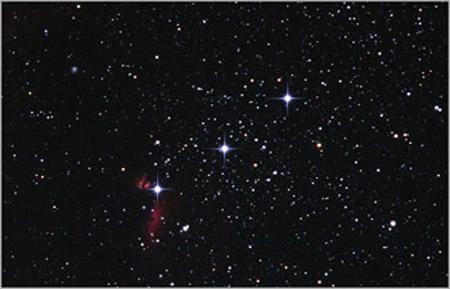
The Legend of Orion


On the other hand, Hopkins provides the reader with a glorified observation of Orion, emphasizing the immense chaos which is life. the world can be a confusing and complicated realm, so Hopkins focuses on the ever-increasing universe that surrounds us. Rather than continuously question God's grandeur and attempt to find meaning behind every facet of life, Hopkins realizes it is Jesus "who gather[s] up in [his] hand us men and these lofty stars" because "all things come from [him]" [2]. Lewis Carroll highlights the nonsensical nature of life, and the need for acceptance rather than questioning, just as Hopkins focuses on the greater plan God has in store for mankind rather than the trivial perplexities of man. There is no need to complicate and construct the structure of life, he releases himself from the desire to define and question, but rather to accept life as it is, and bask in all its glory.

Orion's Belt


Tracking back to the riddle itself, it is important to note "'Carroll intended to spell 'raven' backwards"; although the riddle seemingly had no answer at all, the correction of the word "destroyed the ingenuity of [Carroll's] answer"[3] and the original spelling was never restored, as found by Denis Crutch.Regardless of the error in print, the riddle created an overwhelming sense of confusion and curiosity amongst readers, and "The Spectator, in England, asked for answers to the Hatter's riddle as its competition No. 1683" [4]. Just as described above, it is human nature to derive answers from the unknown, only to cause greater confusion, and perhaps, chaos. 

Works Cited:
1. Lewis Carroll, The Annotated Alice: The Definitive Edition, (New York: W.W. Norton & Company, Inc, 2000), 70.
2. Gerard Manley Hopkins, The Major Works Including all the Poems and Selected Prose (New York: Oxford University Press, 2002), 333.
3. "The Mad Hatter's riddle: why is a raven like a writing desk?," Lenny's Alice in Wonderland site, accessed March 14, 2012, http://www.alice-in-wonderland.net/alice9.html.
4. Carroll, The Annotated Alice: The Definitive Edition, 72.